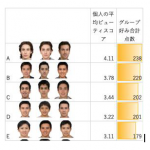
In this study, we analyzed the characteristics of dart-throwing forms that enable beginners to achieve more stable and higher scores by utilizing OpenPose[1], a skeleton detection technology. Skeletal coordinate data of various body parts were obtained from 12 university students as they threw darts using two stance types: the open stance and the closed stance. We then compared the relationship between throwing form and scoring performance.
Although the preferred stance varied among individuals, the closed stance resulted in higher scores overall. Additionally, high-scoring participants exhibited consistent arm positioning at the moment of release, maintaining an appropriate distance between the arm and torso throughout the throw. In contrast, lower-scoring participants tended to show greater variability in their release position, leading to unstable dart trajectories.
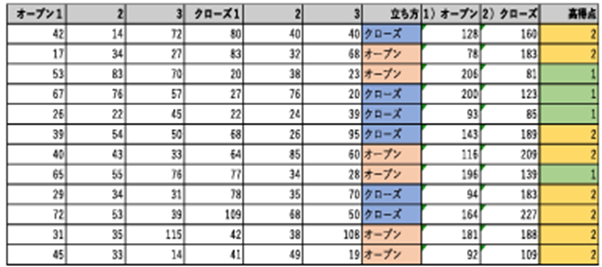
These findings suggest that beginners may improve their performance by adopting a closed stance and maintaining a consistent arm position during release. Future work includes increasing the number of participants to enable more generalizable analysis of throwing form.
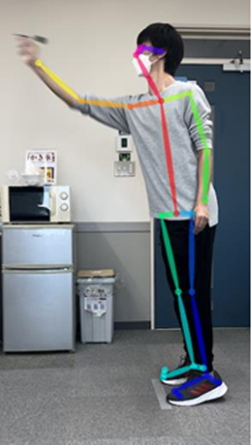
[1]GitHub repositor, https://github.com/CMU-Perceptual-Computing-Lab/openpose, (Reference: 2025/12/18)